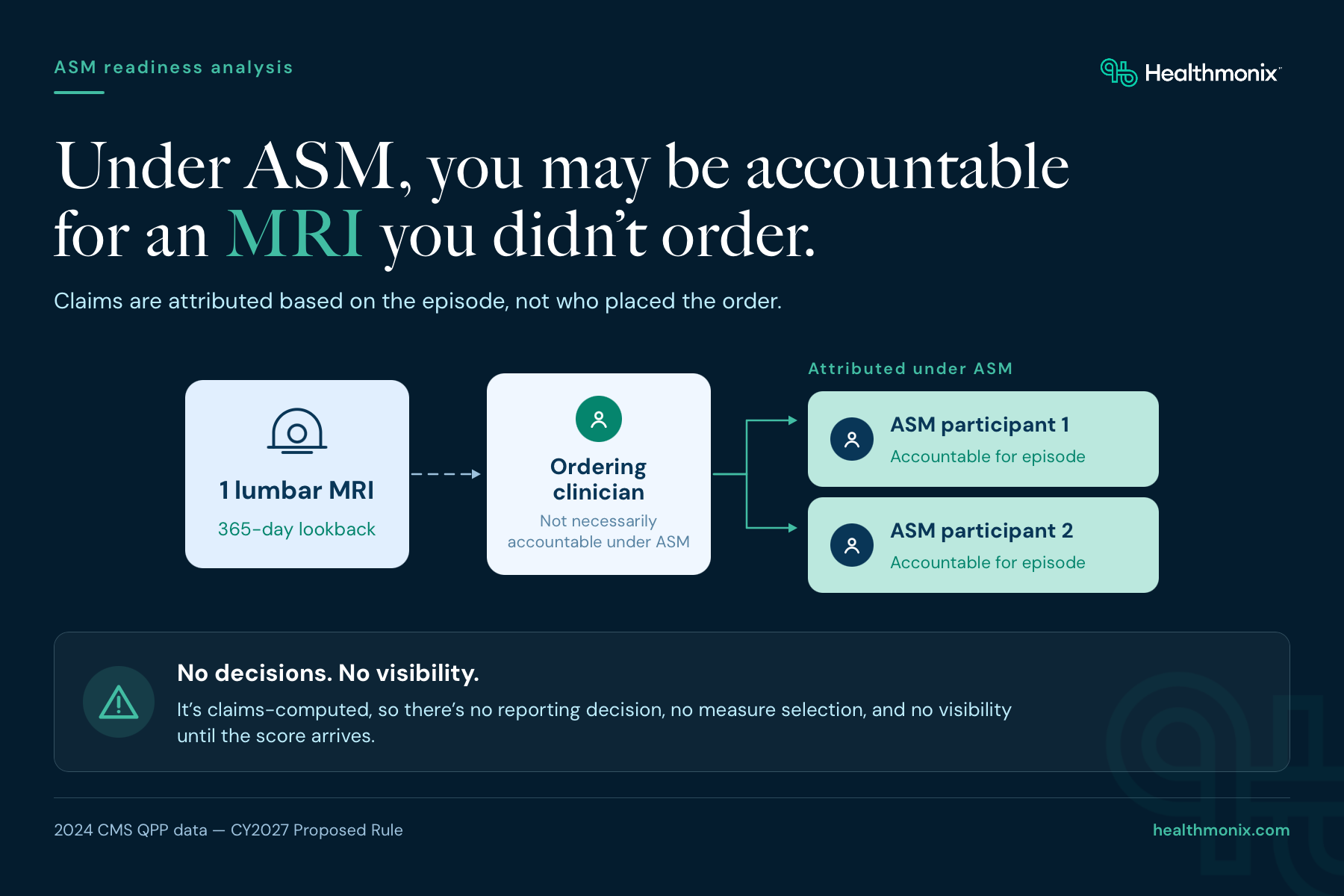
The proposed lumbar imaging measure attributes one scan to multiple clinicians. The 2024 data shows this machinery already at work.
The CY2027 Proposed Rule adds a claims-based measure of potentially unnecessary lumbar MRI use to the Ambulatory Specialty Model's low back pain cohort. Because it’s computed from administrative claims, it requires no reporting. That sounds like good news for busy practices.
Read the attribution design before agreeing. CMS proposes a 20-case minimum, a 365-day lookback, and attribution of each imaging event to multiple ASM participants whose care is sufficiently connected to it. One MRI can count against more than one clinician. Each carries individual two-sided payment risk on it. Neither is necessarily the one who ordered it.
Read More
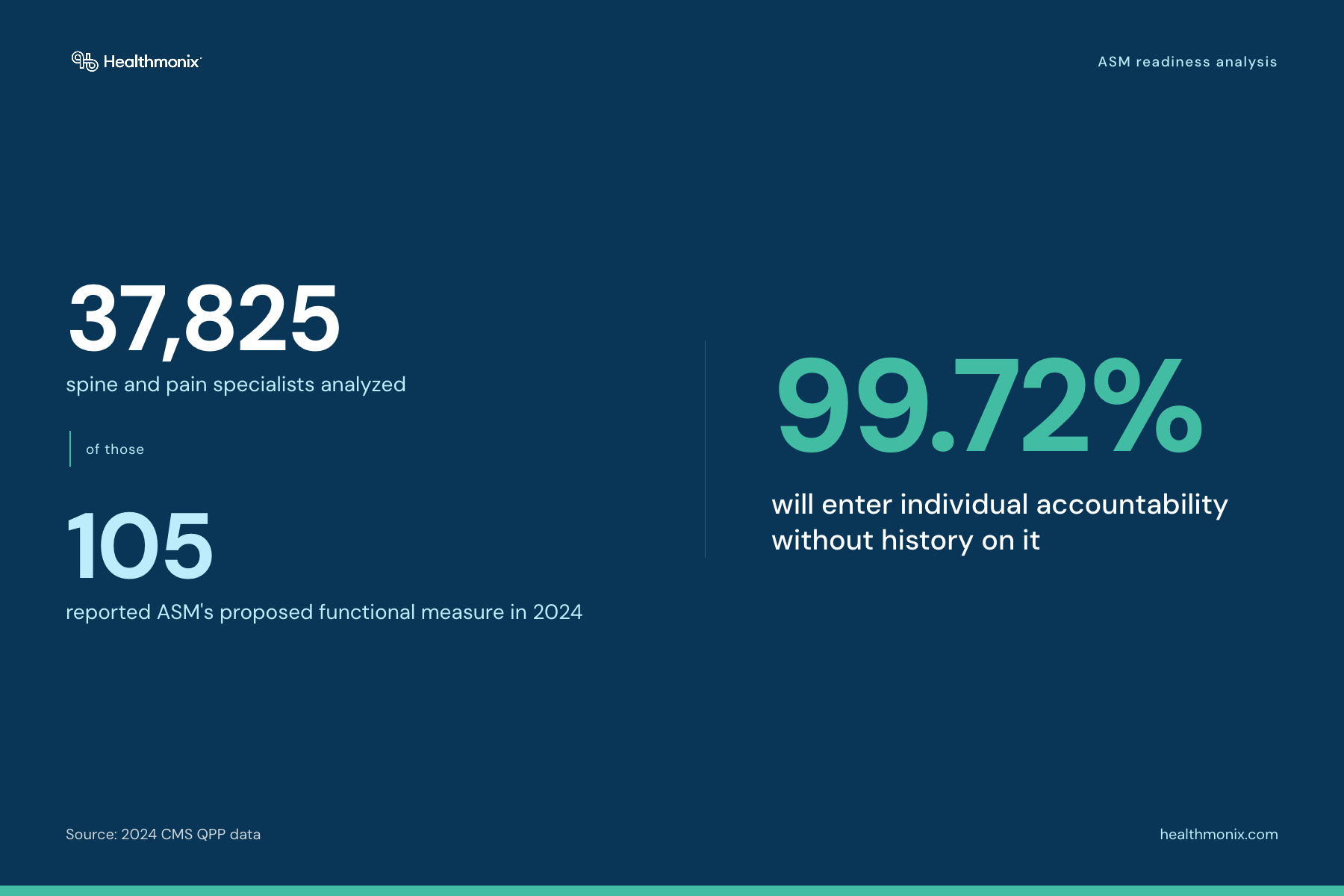
The low back pain cohort enters individual accountability in 2027 with almost no history on the measures it will carry.
We analyzed the most recent CMS Quality Payment Program data for the 37,825 clinicians in the 6 specialties that make up the Ambulatory Specialty Model's low back pain cohort: anesthesiology, interventional pain management, neurosurgery, orthopedic surgery, pain management, and physical medicine and rehabilitation.
Read More
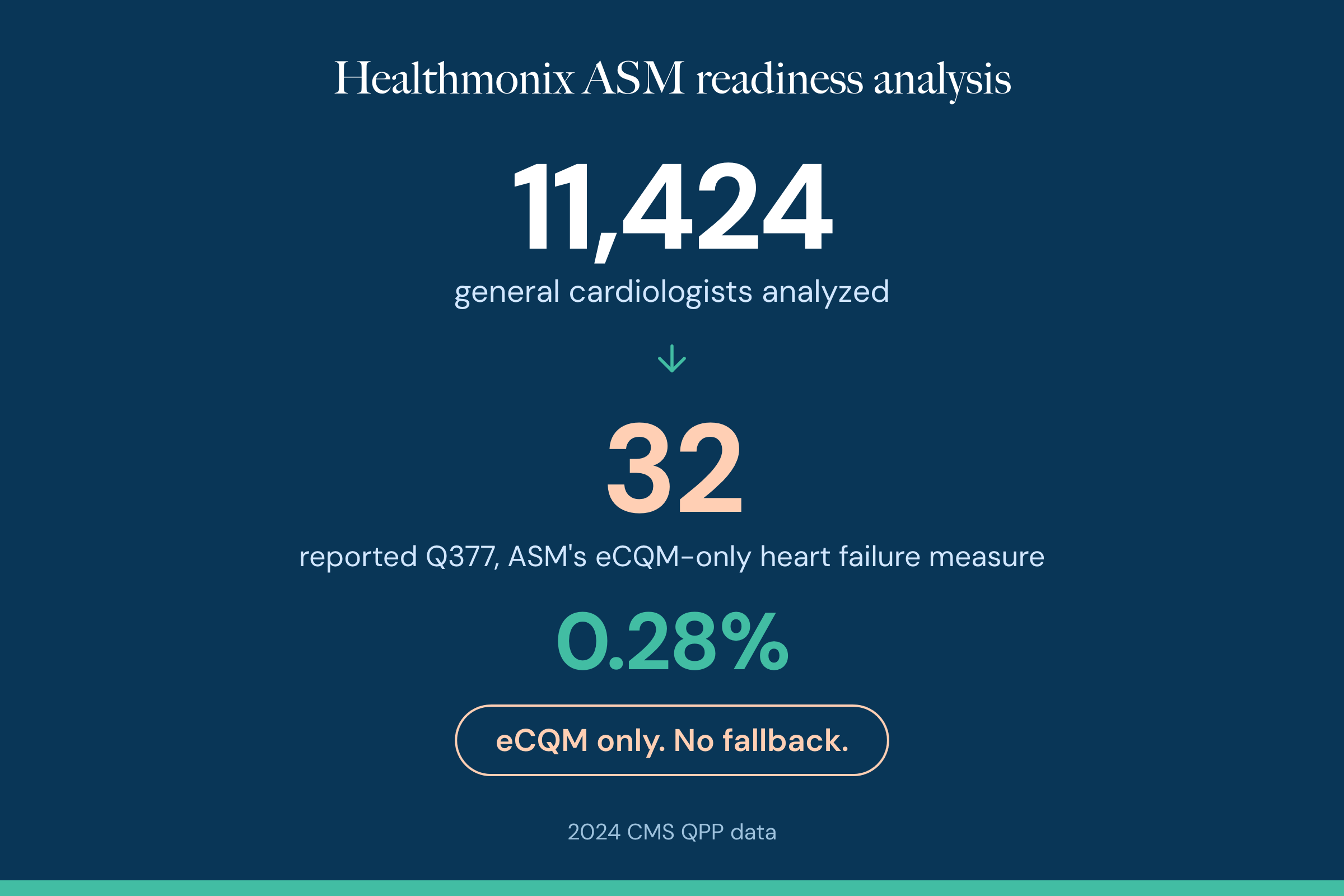
CMS has already given us the closest available preview of individual heart failure performance. The distribution isn't reassuring.
We analyzed the most recent CMS Quality Payment Program data for all 11,424 general cardiologists, the population the Ambulatory Specialty Model's heart failure cohort draws from. Only 32 of them reported Q377, Functional Status Assessments for Heart Failure, in 2024. Just 273 clinicians reported it across every specialty in American medicine.
Read More
What the CY2027 Proposed Rule changes about the Ambulatory Specialty Model, and what it still leaves unresolved
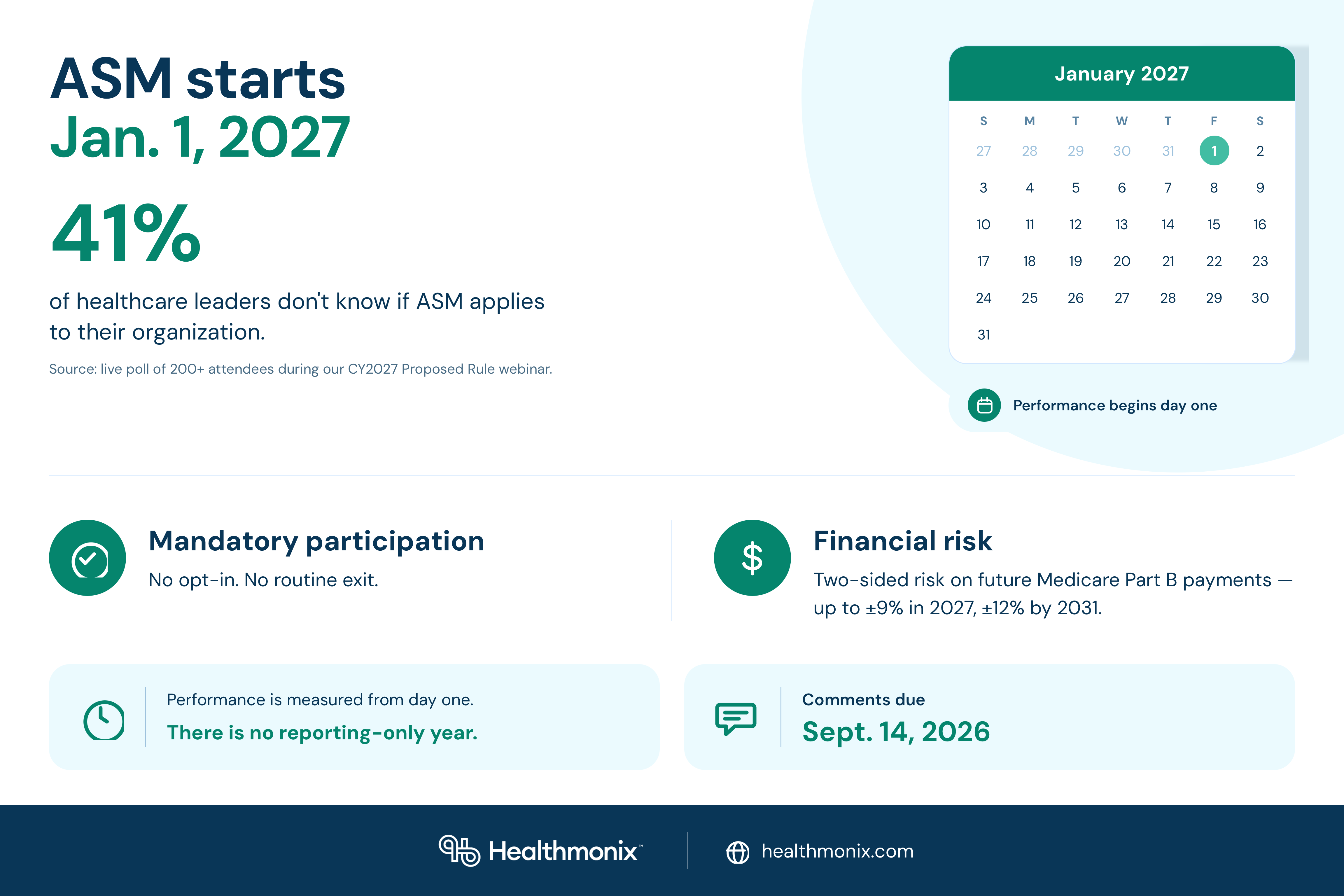
On Jan. 1, 2027, selected specialists will begin participating in a mandatory CMS payment model with two-sided financial risk. Yet many organizations still don't know whether the model applies to them.
Read More
The Future of Value-Based Care
A new ten-year experiment called ACCESS is about to test exactly that question — and it could reshape how chronic illness is cared for in America.
Read More
Topics:
VBC,
Value-Based Care,
Conference,
APG,
healthcare,
ACCESS
For roughly a decade, the operating assumption of value-based care has been that you transform outcomes and costs by transforming primary care:
• Attribute the patient to a PCP
• Hand the PCP a panel and a risk arrangement
• Give the care team a gap list
• Let the rest of the system carry on
That model has produced real wins. It’s also produced a generation of risk-bearing organizations that have squeezed most of what they can out of the levers a primary care physician controls and now find themselves staring at the part of the spend they don’t.
Read More
Topics:
CMS,
VBC,
Value-Based Care,
Conference,
APG
For a decade, the question was whether to take risk. Now it's whether your measurement infrastructure can keep up.
About 1,300 medical group executives gathered at AMGA in Las Vegas last month. Most have already committed capital to value-based care. The strategic debate is over. A new one is starting.
Read More
Topics:
CMS,
VBC,
Value-Based Care,
MIPS Reporting,
Conference,
AMGA,
AI
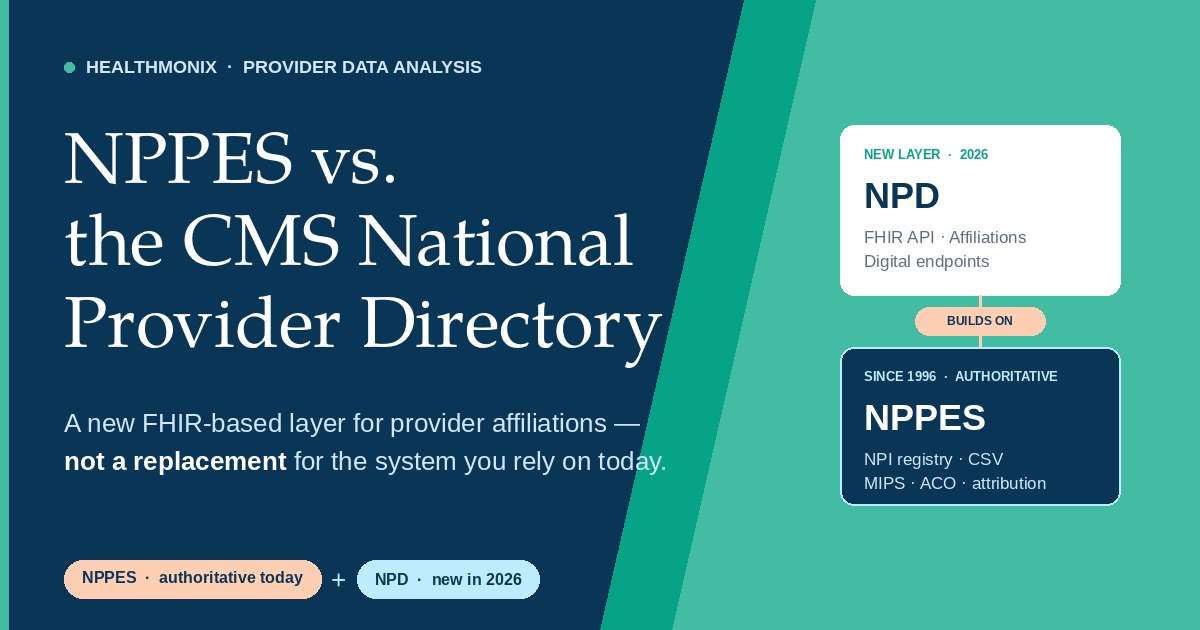
NPPES remains the authoritative source for MIPS, cost attribution, and ACO enrollment today and shouldn't be replaced. The new CMS National Provider Directory (NPD) is a FHIR-based API layer that adds what NPPES can't explicit provider-organization affiliations, near real-time updates, and digital endpoints. For Healthmonix and Prism, the play is to keep NPPES operational while ingesting NPD alongside it, unlocking a "Provider Network Intelligence" layer.
Read More
Topics:
CMS,
NPPES
Jon McNeill, CEO of DVx Ventures and former President of Tesla, opened HIMSS26 with a deceptively simple provocation: automation always comes last. In a conference hall full of people who flew to Las Vegas to talk about AI, his statement landed with force.
Read More
Topics:
ACO,
Quality Performance Category